Most Profitable Aromatic Crops in India: A Comparative Guide
Compare aromatic crops in India using climate fit, cultivation costs, oil recovery, processing access, price risk and realistic profit scenarios.

There is no single 'most profitable' aromatic crop
Aromatic crops can offer attractive value per unit of harvested material, but profit depends on much more than the selling price of essential oil. One farm may have dependable irrigation and a nearby distillation unit, while another must move fresh material long distances. A crop that performs well in one state may fail commercially in another. Treat universal lists of 'top ten high-profit crops' with caution unless they disclose region, season, assumptions and actual realized prices.
The practical question is: which crop can your land, water supply, labor availability, processing access and target buyer support at an acceptable level of risk?
The candidates worth evaluating
Lemongrass is a perennial grass valued for aromatic oil and repeated leaf harvests; its commercial appeal depends on the intended oil profile and processing logistics. Cornmint is cultivated for mint oil used in downstream flavor, fragrance and related ingredient chains, but varieties and markets must be distinguished carefully. Palmarosa can be relevant where the market requires its characteristic geraniol-rich oil. Citronella has particular ingredient uses and a different chemical profile from lemongrass. Vetiver is a root crop, with a long crop cycle, substantial harvesting labor and comparatively demanding distillation.
Geranium, lavender, basil and other aromatic crops may be suitable in particular agroclimatic situations, but growing them simply because their bottled retail oils look expensive is risky. Retail prices do not translate directly to farm-gate returns or industrial bulk demand.
Evaluate climate and growing-cycle fit first
List temperature tolerance, rainfall timing, irrigation requirements, soil drainage, establishment period, likely harvest windows and post-harvest handling needs. The exact requirements vary by species and cultivar. Mark candidates that your location can support consistently, not just in an unusually favorable year.
Next assess labor and timing. A crop needing specialized harvest or root cleaning can become unviable if seasonal labor is unavailable. Long crop cycles also tie up land and capital for longer periods before a sale occurs.
Model annual economics using comparable units
For each candidate, prepare a per-acre, per-year model: accepted oil revenue plus any legitimate additional revenue, minus all costs incurred in the same period. For a newly planted perennial, separate establishment costs from recurring annual expenses and account for the crop's productive lifespan. A one-season calculation that excludes initial capital is not comparable with a crop whose full costs are charged upfront.
Add at least three outcome scenarios. In the conservative case, assume weaker biomass, lower recovery, a cautious selling price and possible logistics delays. In the central case, use observed local performance. In the favorable case, avoid stacking unrealistically perfect conditions. The crop with the highest optimistic profit may not be the most resilient choice.
Market access can outweigh yield
A high-recovery crop is not commercially useful without a buyer who accepts its actual specification. Obtain purchase terms for the appropriate botanical oil, grade, packaging and batch size. Verify whether the buyer needs a GC-MS profile, certificate of analysis or other documentation and who pays for those checks. Understand whether prices refer to ex-farm, ex-distillery or delivered material.
Distance to distillation affects both expenses and quality. A nearby, well-operated still can be a decisive advantage for bulky fresh plant material. Long transport and waiting times may reduce the attractive numbers seen in a spreadsheet.
A crop comparison scorecard
Score each crop from one to five for five dimensions: agroclimatic suitability, access to processing, verified buyer demand, confidence in yield estimates and downside financial resilience. Keep the underlying evidence visible. Do not let a single high oil price offset poor agronomic suitability or absent processing capacity.
A cautious grower can pilot two or three promising crops on limited area, record the entire cycle, and then prioritize the one that delivers reliable accepted output and timely payment, not the one with the strongest marketing claims.
Where Yathaavat can help
Aromatics sourcing and cultivation become easier to evaluate when the same record connects the field, biomass harvest, distillation batch, quality analysis and buyer requirements. A transparent calculator is an early planning aid; actual outcomes should feed back into the next set of assumptions. This also helps prevent farmers from expanding acreage based on misleading benchmark yields.
Frequently asked questions
Is the crop with the most expensive oil always the most profitable? No. Crop yield, root or leaf handling, time to harvest, processing cost and the ability to sell acceptable oil matter more than retail bottle prices.
Should farmers choose a crop before finding a buyer? Ideally, buyer and distillation feasibility should be established before committing substantial acreage.
Can one per-acre comparison work across all Indian states? No. Climate, irrigation, labor, land cost, cultivar and access to processing vary substantially.
Compare crop-level scenarios in Yathaavat's expense and oil-yield calculators; use local inputs rather than published averages as a final investment case.
Related Articles
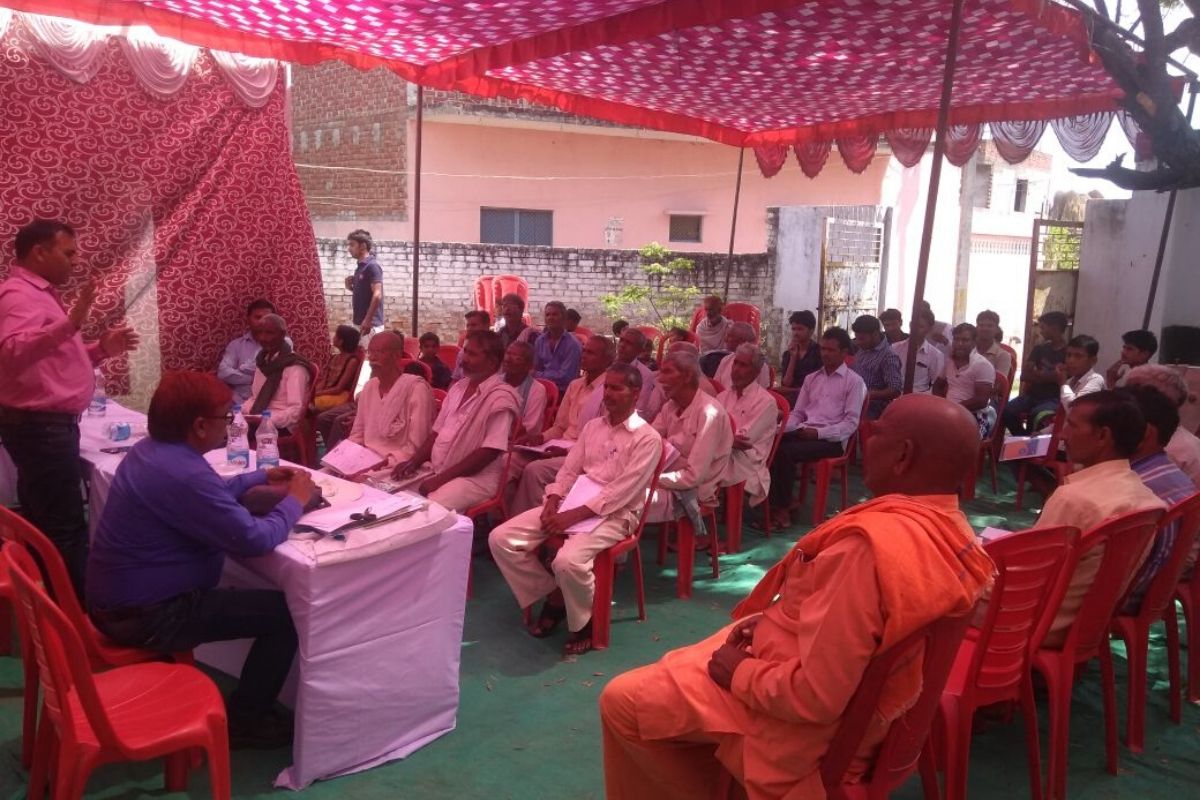
Sustainable Farming Practices in Cultivation of Aromatic Crops in India
Sustainable farming is shaping the future of India’s aromatic crops. Through crop rotation, organic fertilizers, pest management, and water conservation, farmers can boost essential oil yield while protecting nature. At Yathaavat Solutions, we blend traditional wisdom with science to deliver pure, natural, and traceable oils with sustainable impact.
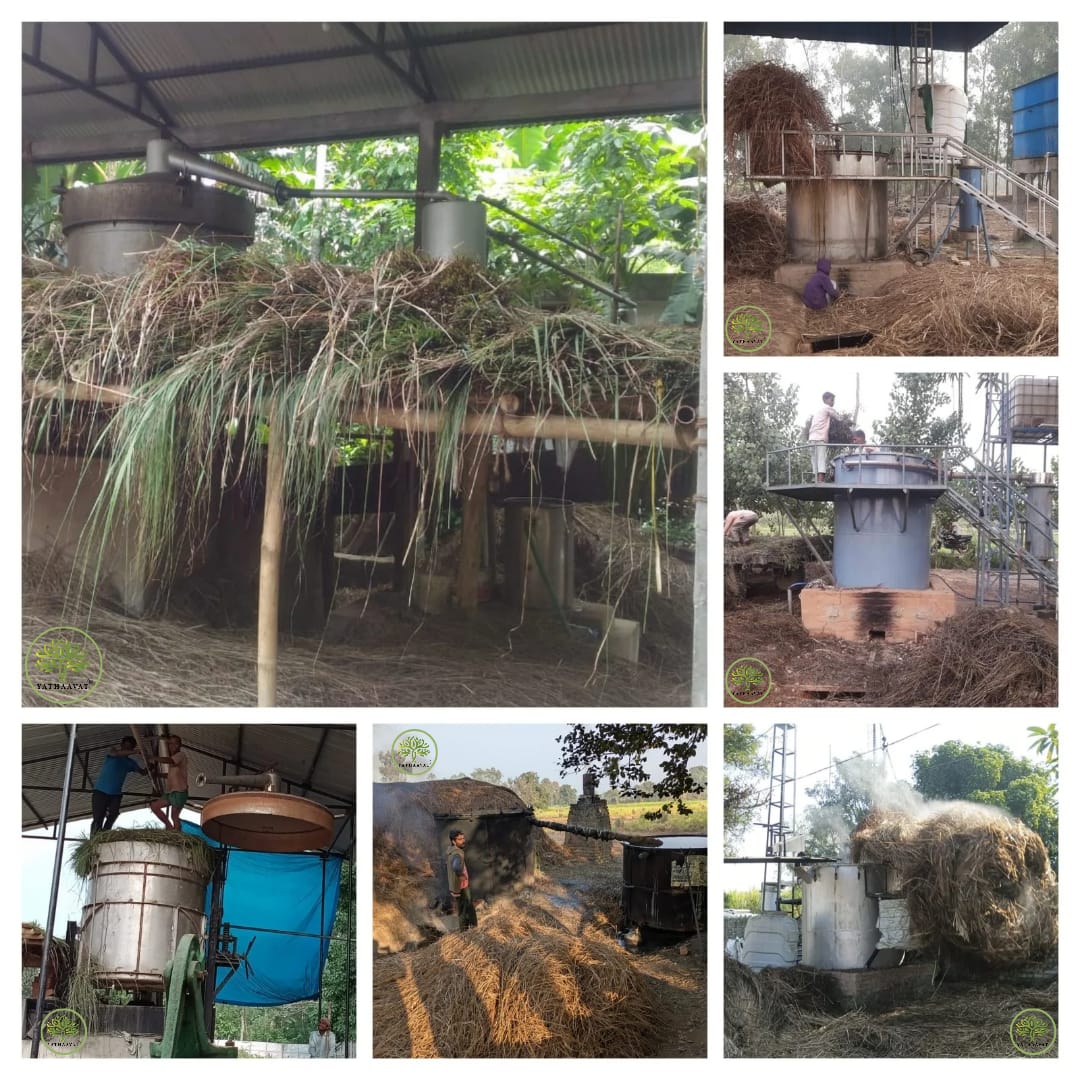
Lemongrass Farming in India: Cultivation, Costs and Yield
Learn how to plan lemongrass cultivation in India, from soil and planting to harvest, distillation, costs and oil-yield uncertainty.
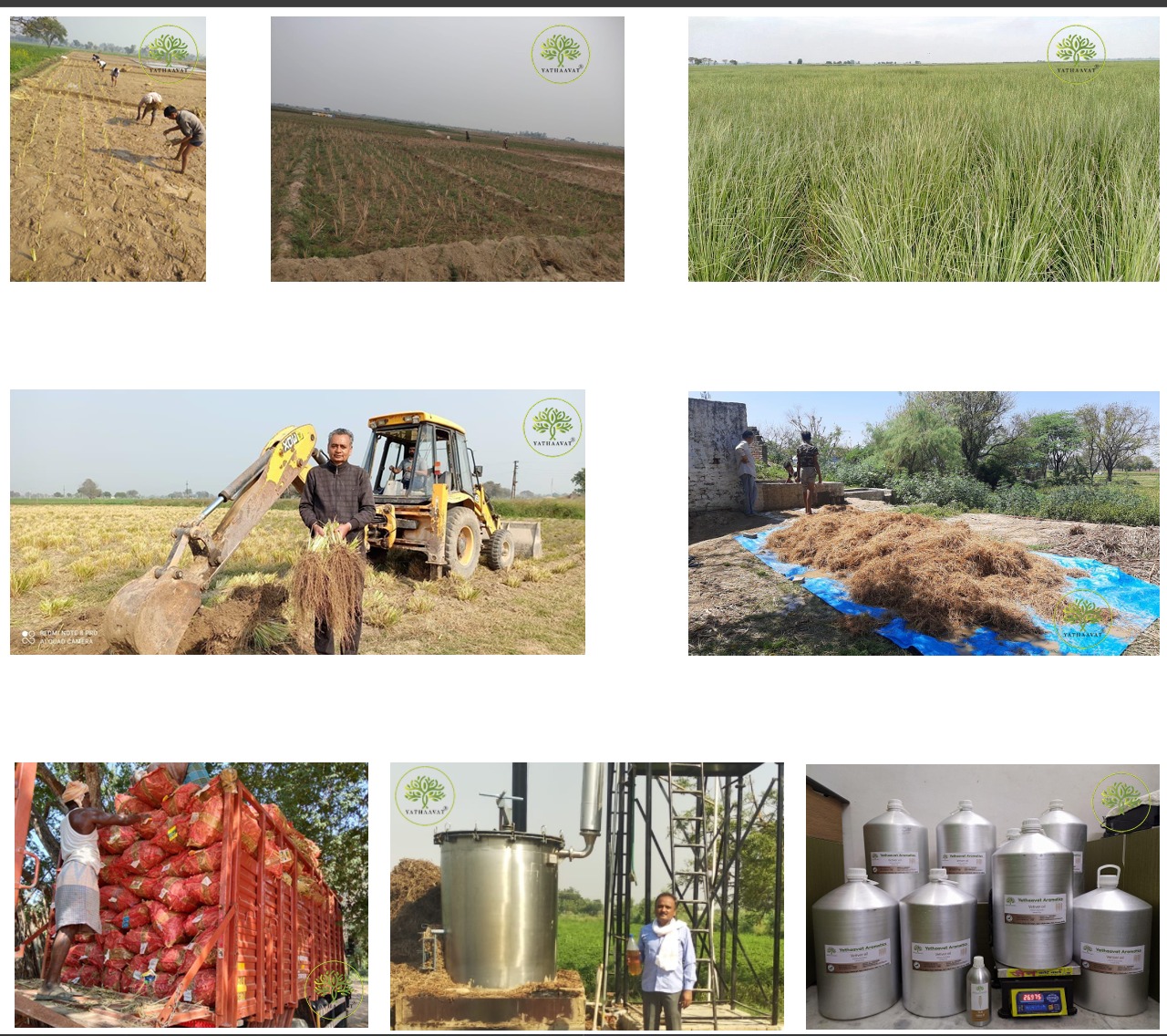
Vetiver Cultivation: Planting, Harvesting and Root Processing
Understand vetiver establishment, soil and drainage needs, root harvesting, cleaning, distillation and the economics of producing vetiver oil.