Zero Waste Essential Oil Steam Distillation at Cluster Units in India
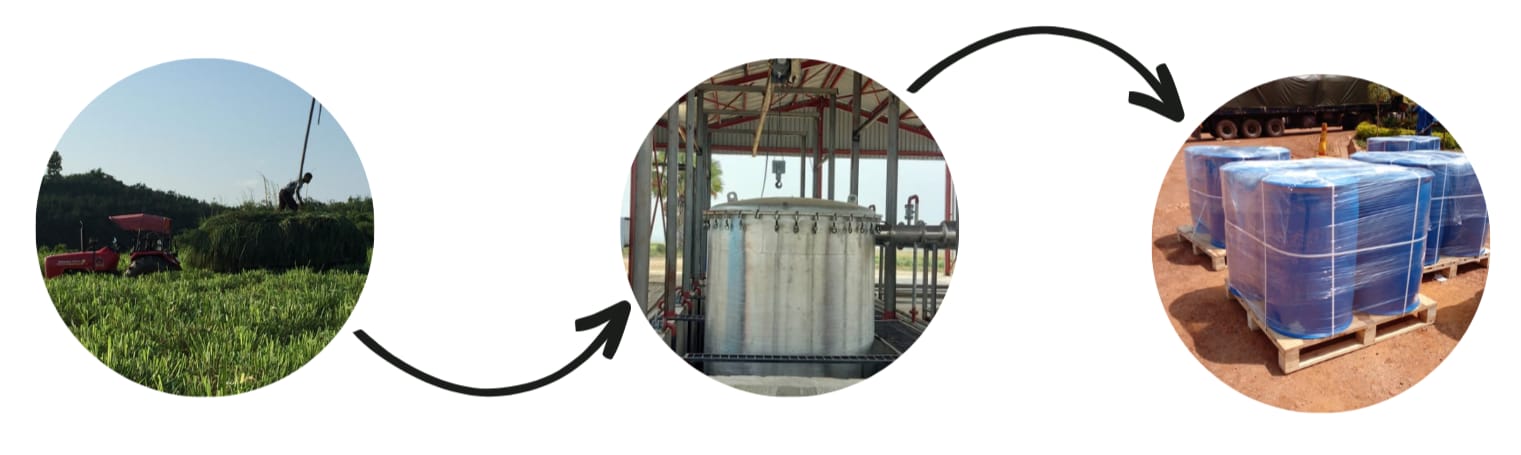
Yathaavat Solutions is leading the way with Zero Waste Steam Distillation in India. From using biomass as boiler fuel, recycling water, converting residues into compost and biochar, to selling hydrosols as co-products—our farmer clusters are creating more income, reducing waste, and making Indian essential oils truly sustainable.
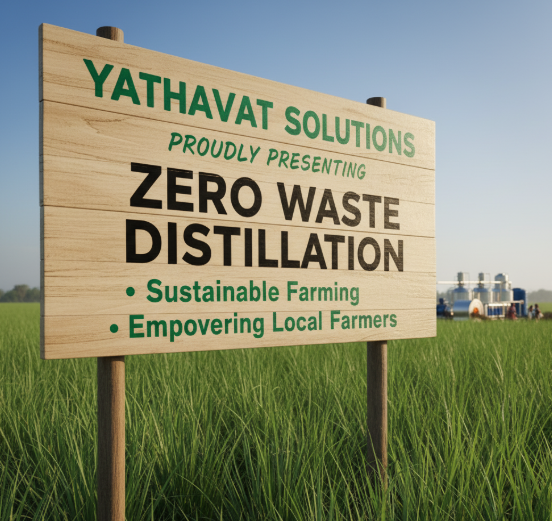

How Yathaavat and Farmer Clusters Are Building a Sustainable Future
India has always been called the land of aromas—from the fields of Vetiver (khus) and Mints in Uttar Pradesh to Lemongrass in Assam and Odisha, to Basil in Madhya Pradesh, Geranium in Maharashtra, Palmarosa in Gujarat, and Wild Marigold in Uttrakhand. Essential oils from India are trusted worldwide for their purity and naturality. But there is another side to this story: the huge amount of waste created during distillation.
Traditionally, steam distillation of essential oils leaves behind three kinds of waste:
- Hydrosols (aromatic water)—often discarded.
- Biomass residues (leaves, roots, stems)—usually dumped or burned.
- Excess water—used once, then thrown away.
At Yathaavat Solutions, working with our cluster of farmers, we have started Zero Waste Essential Oil Distillation Units that ensure nothing is wasted and every by-product is turned into value. This is not just about saving costs—it’s about creating new income for farmers, reducing pollution, and protecting our environment.
1: Biomass as Boiler Fuel
Earlier, most of our cluster farmers used firewood to generate steam for distillation. It was expensive, harmful to forests, and inefficient. Now, we are using biomass residues from distillation (roots, leaves, stems) as boiler feedstock.
- Result: Steam generation cost reduced by almost 30%.
- Impact: Less dependence on firewood, reduced deforestation pressure.
- Farmer benefit: More savings and a cleaner energy source.
This simple shift has made our units not only cheaper to run but also greener.
2: Smart Water Recycling
Distillation requires a large amount of water to generate steam and cool the condensers. In many areas of India, water scarcity is a big challenge. At Yathaavat’s cluster units, we have designed a water recycling system where the condensed water is cooled, filtered, and reused.
- Result: Water requirement per kg of oil reduced by up to 50%.
- Impact: Farmers save water for irrigation and drinking purposes.
- Environment: Reduced wastewater discharge into the soil.
This smart water usage model is helping our units run sustainably even in drought-prone regions.
3: Biomass for Agro-Mulching, Compost & Biochar
Instead of burning distillation residues, farmers now use them directly in fields as mulch, or convert them into compost and biochar.
- Mulching: Helps retain soil moisture and prevents weeds.
- Compost: Improves soil fertility naturally, reducing the need for chemical fertilizers.
- Biochar: Locks carbon into the soil, improving soil health and reducing greenhouse gases.
This creates a circular farming model where the crop waste returns to the soil to improve the next cycle of crops.
4: Hydrosols – From Waste to Wealth
For decades, hydrosols (floral waters) were thrown away. But now, the cosmetic, wellness, and food industries are demanding them. At Yathaavat, we capture, filter, and store hydrosols properly.
- Use Cases: Skin toners, natural sprays, herbal teas, aromatherapy, and natural cleaners.
- Market: Cosmetics and food formulators. The global hydrosol market (~$700M in 2022) is expected to reach $1.2B by 2032, growing at a 5.5–5.8% CAGR.
- Farmer Benefit: An extra ~5-10% income on top of essential oil sales.
This extra income is improving the overall gross margin and net profitability for our farmer clusters.
Why Zero Waste Distillation Matters for India
- Water Conservation → Reduced water use is critical for Indian agriculture.
- Farmer Income Boost → By-products create new revenue streams.
- Reduced Pollution → No burning of biomass or discharge of hydrosols.
- Sustainable Branding → Buyers trust Indian oils with traceability and eco-friendly practices.
🇮🇳 The Indian Advantage
India is home to over 1.5 million hectares of medicinal and aromatic crops, supported by institutes like CSIR-CIMAP (Lucknow) and NBRI. With global demand for natural and traceable oils growing, India has the chance to become the world leader in sustainable essential oil production.
At Yathaavat, we are using both the traditional wisdom of farmers and modern scientific methods to make this vision possible.
Yathaavat’s Road Ahead
- Expanding zero waste cluster units in more states.
- QR-based traceability for buyers.
- Frequent farmer training workshops on Zero Waste distillation.
- More research to reduce water (in L) per kg of oil production and on biomass-to-energy and biochar systems.
Conclusion
Zero Waste Distillation is not just a technology—it is a mindset towards sustainability. At Yathaavat Solutions, we are proud that our cluster farmers are leading the way. From using biomass as boiler fuel, to water recycling, to hydrosol commercialization, we are showing that Indian essential oils can be pure, profitable, and planet-friendly.
Every drop of oil now carries the hard work of our farmers and the promise of a better future.
Viral Hashtags
#YathaavatSolutions #ZeroWasteDistillation #EssentialOils #FarmToBottle #Hydrosols #Biomass #WaterRecycling #Aromatics #SustainableFarming #FarmersFirst #EssenceOfTrust #InnovationFromIndia