From Farm to Bottle: Mint Story | Jun 2026
India's 2026 mint season has brought significant changes to the essential oils market. Reduced Cornmint cultivation, strong Peppermint and Spearmint production, and shifting farmer preferences are reshaping supply and pricing. In this market update, Yathaavat Aromatics shares on-ground insights, crop trends, and what these developments mean for buyers, exporters, and the global essential oils industry.

How Farmers' Decisions Are Shaping the Future of Natural Mint Oils
Every season, thousands of farmers across Uttar Pradesh make important decisions about which crops to cultivate. These decisions directly influence the availability, quality, and pricing of natural essential oils in both domestic and international markets.
At Yathaavat Aromatics, we work closely with farmer clusters across India through our Farm-to-Bottle Direct-to-Business (D2B) supply chain. This gives us first-hand insights into crop conditions and market trends. Here's this season's version, told through three mint cousins: Cornmint, Peppermint, and Spearmint.
The Cornmint Gamble That Didn't Pay Off
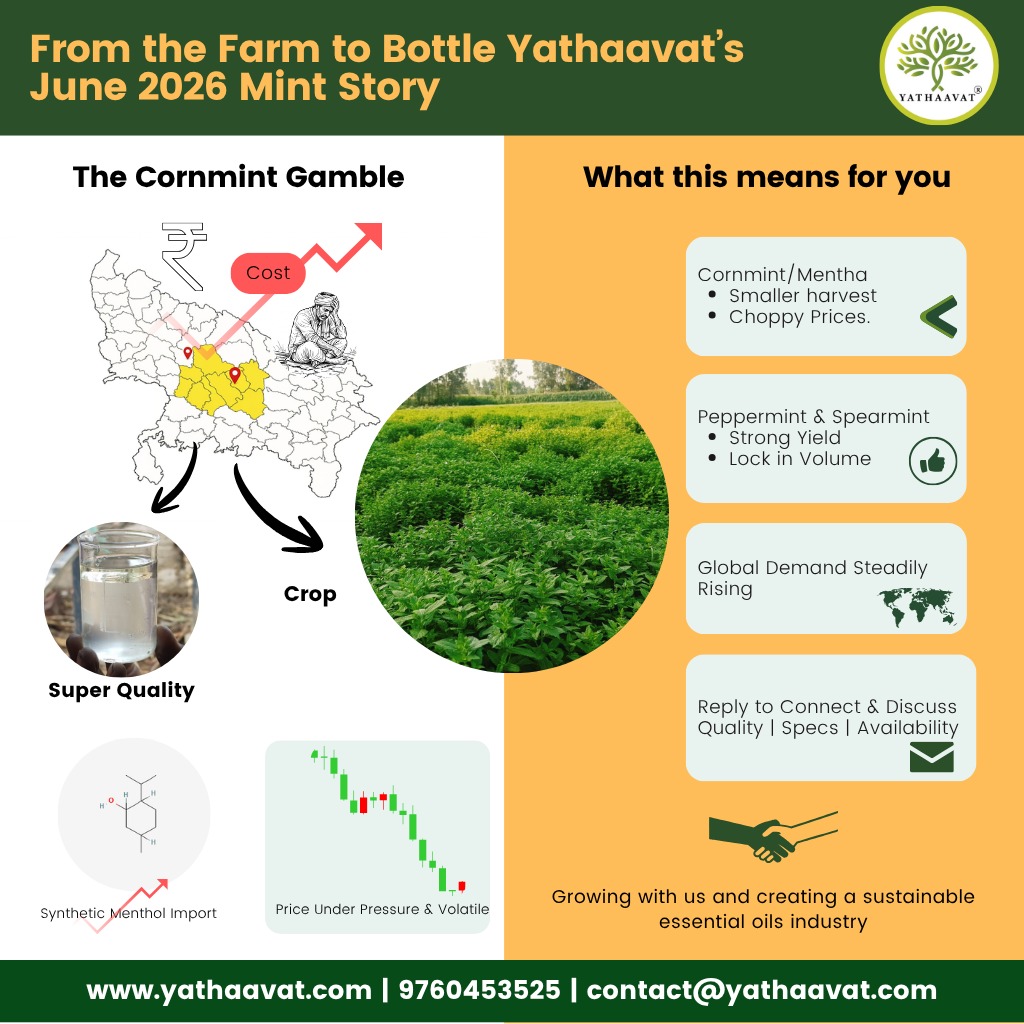
During the 2026 season, many farmers reduced the area under cultivation of Cornmint (Mentha arvensis), thereby reducing natural Cornmint oil production by more than 50% in India.
Several factors influenced this decision:
• 𝗟𝗼𝘄𝗲𝗿 𝗽𝗿𝗼𝗳𝗶𝘁𝗮𝗯𝗶𝗹𝗶𝘁𝘆 𝗶𝗻 𝗿𝗲𝗰𝗲𝗻𝘁 𝘆𝗲𝗮𝗿𝘀: It's a big part of why acreage under this crop dropped sharply this season.
• 𝗥𝗶𝘀𝗶𝗻𝗴 𝗰𝘂𝗹𝘁𝗶𝘃𝗮𝘁𝗶𝗼𝗻 𝗮𝗻𝗱 𝗹𝗮𝗯𝗼𝘂𝗿 𝗰𝗼𝘀𝘁𝘀: Cultivating mentha costs a farmer roughly ₹30–35k per acre, for a yield of about 60–65 kg of oil. The current price trend has been under pressure and volatile.
• 𝗣𝗿𝗶𝗰𝗲 𝗳𝗹𝘂𝗰𝘁𝘂𝗮𝘁𝗶𝗼𝗻𝘀 𝗶𝗻 𝘁𝗵𝗲 𝗺𝗮𝗿𝗸𝗲𝘁: Farmers spend four months growing a crop - watering, weeding, worrying about the weather. Harvest comes, you distill your essential oil, and then the price swings ₹150 per kg in a single week, for reasons that have nothing to do with your field.
• 𝗖𝗼𝗺𝗽𝗲𝘁𝗶𝘁𝗶𝗼𝗻 𝗳𝗿𝗼𝗺 𝘀𝘆𝗻𝘁𝗵𝗲𝘁𝗶𝗰 𝗺𝗲𝗻𝘁𝗵𝗼𝗹 𝗽𝗿𝗼𝗱𝘂𝗰𝘁𝘀: India itself imported over $135–150 million worth of menthol in 2025, even while remaining the world's largest 𝗻𝗮𝘁𝘂𝗿𝗮𝗹 𝗺𝗲𝗻𝘁𝗵𝗮 𝗼𝗶𝗹 exporter - and it's easy to see why many growers decided the gamble wasn't worth repeating.
As a result, India's natural Cornmint production is expected to be lower than previous seasons. Buyers relying on natural Mentha Oil should consider planning procurement in advance.
A pattern from the mentha belt: In long-standing cornmint clusters around western UP - places like Sambhal and Chandausi that have grown mentha for generations - many two- and three-acre farmers made the same call this year: keep a small plot of cornmint out of habit, but shift most of the land to something steadier. That "something steadier" was almost always peppermint.
Peppermint & Spearmint: The Season That Rewarded Patience
While cornmint struggled, its two cousins had one of their best seasons in years.
Global demand for both oils has been climbing steadily, pulled along by everyone from chewing-gum makers to toothpaste brands to the fast-growing aromatherapy and wellness industry. India's peppermint oil exports alone reached $70 million in 2025, headed mostly to the US, Germany, China, the UK, and France. And unlike the synthetic pressure facing cornmint, natural peppermint oil still holds a commanding share of its market - buyers clearly want the real thing.
A pattern from the peppermint belt: Growers around Rampur and Barabanki who added peppermint alongside their cornmint over the past couple of seasons are now among the more content farmers in the region. Harvests wrapped up on schedule, yields were healthy, and - the part that matters most to a farming family - the prices they received matched what they expected going in. Word travels fast in farming communities, and neighbouring villages are already asking how to get started next season.
What This Means for You
Cornmint / Mentha Oil - smaller harvests and choppier prices likely ahead. If natural mentha oil or menthol is core to your supply chain, this is a good year to talk forward coverage rather than wait for spot availability. Peppermint & Spearmint Oil - a genuinely good year. Strong yields, satisfied farmers, solid quality. A good window to lock in volume.
Yathaavat's Farm-to-Bottle Commitment
At Yathaavat Aromatics, we collaborate directly with farmer clusters from seed selection to cultivation, harvesting, distillation, warehousing, quality testing, and global supply.
This Farm-to-Bottle approach helps us provide:
• 100% Natural Essential Oils
• Traceable sourcing
• Batch consistency
• Transparent supply chain
• Reliable long-term partnerships
Looking Ahead
As cultivation patterns continue to evolve, transparency between farmers, processors, and buyers becomes increasingly important.
If Peppermint Oil, Spearmint Oil, or Cornmint Oil is part of your sourcing plan, our team would be happy to discuss crop availability, quality specifications, representative batch samples, and supply schedules.
Together, let's build a stronger, more transparent, and sustainable global essential oils industry.
